
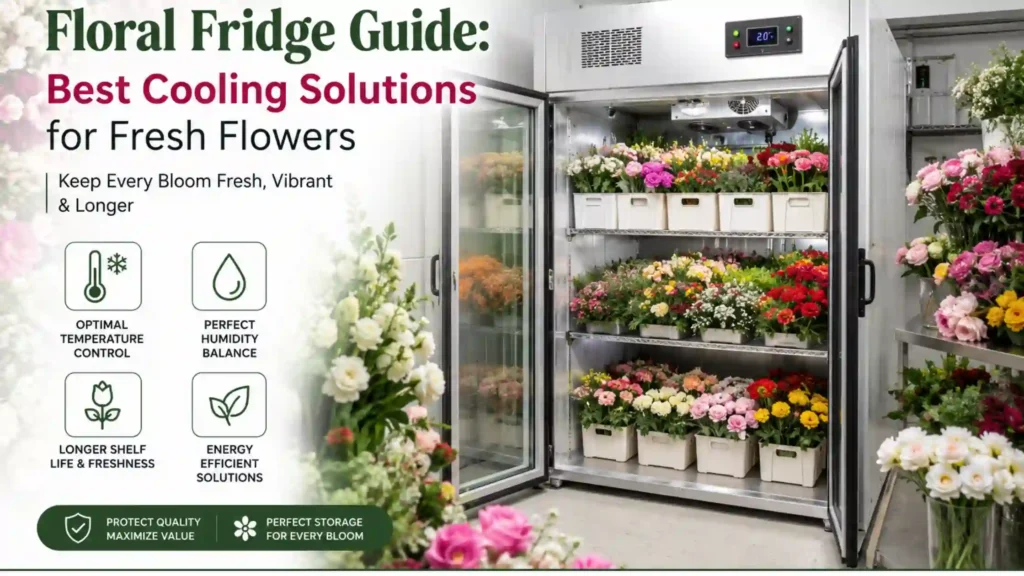
Floral Fridge Guide: Best Cooling Solutions for Fresh Flowers
Why Floral Fridges Are Essential for Flower Preservation
Cut flowers start losing water and quality the moment they’re harvested. A dedicated floral fridge slows that clock by holding the exact temperature and humidity flowers need to stay fresh, something a standard kitchen appliance was never built to do. For florists, hotels, supermarkets, and event businesses across the UAE, a reliable flower refrigerator isn’t a luxury purchase, it’s the piece of equipment that decides how much stock survives to the point of sale. Every day a flower cooler runs at the wrong temperature is stock quietly turning into waste.
Quick Answer for Floral Fridge Buyers
If you only have a minute: look for a unit that holds 33–35°F with 80–95% humidity, uses low-velocity baffled airflow, and includes ethylene control. Glass doors and LED lighting help with display, but temperature and humidity accuracy matter more than looks. Match the size to your daily flower volume rather than your available floor space, and check after-sales support before you buy.
Floral Fridge Fundamentals – What Sets It Apart?
A commercial flower cooler is engineered around the biology of cut flowers, not around food storage. The table below shows how it compares to the appliances people often confuse it with.
| Feature | Floral Fridge | Beverage Cooler | Regular Refrigerator |
| Temperature Range | 33-35°F | 35-38°F | 35-40°F |
| Humidity Level | 80-95% | 60-70% | Below 10% |
| Airflow Type | Low-velocity, baffled | Medium velocity | High-velocity |
| Ethylene Control | Yes | No | No |
| Display Features | Glass doors, LED lighting | Glass doors | Solid/glass doors |
| Typical Use | Cut flowers, arrangements | Beverages, some food | Food storage |
The humidity gap is the one that catches most buyers off guard. A regular refrigerator strips moisture from the air to keep food safe, which is precisely what dries out petals and shortens vase life. A flower refrigerator does the opposite, holding humidity high enough to keep stems hydrated for days longer.
How a Floral Fridge Protects Your Investment
Flowers are perishable stock, and every wilted bunch is money that already left the till. A properly running floral fridge extends shelf life, reduces shrinkage, and lets a shop buy in larger, more cost-effective quantities without gambling on spoilage. It also protects the display itself, since consistent cooling means arrangements look fresh right up until they’re sold rather than fading by the afternoon. For businesses that supply hotels or events, a dependable flower cooler is also what keeps repeat contracts, because clients notice when stems arrive limp.
Must-Have Technologies & Features in a Modern Floral Fridge
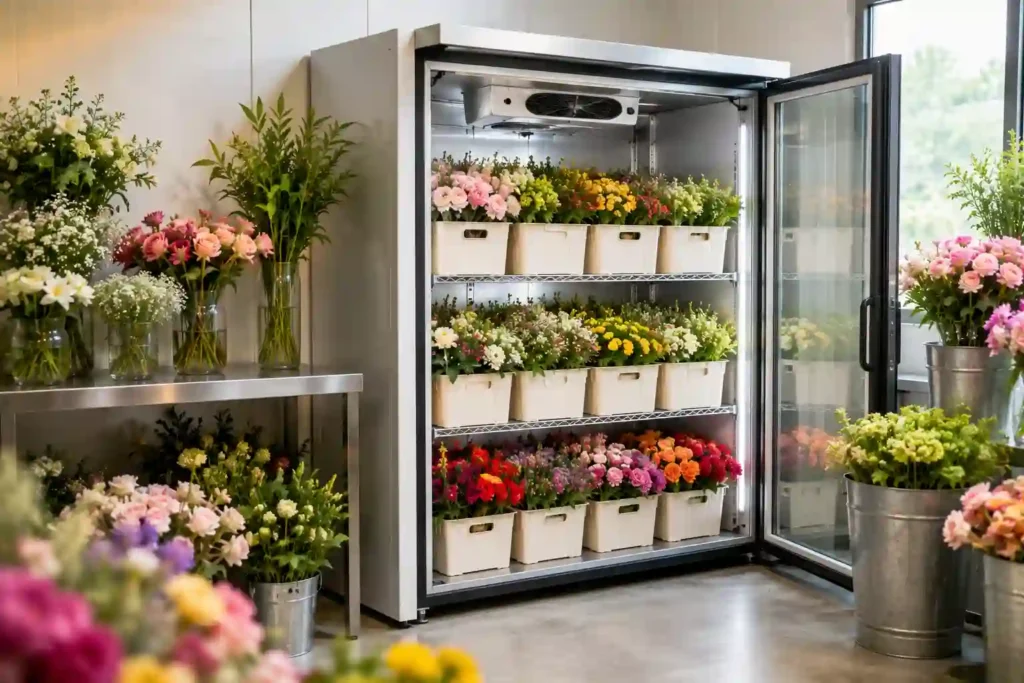
Look for digital temperature control with a tight range, forced-air evaporators that distribute cold air evenly without blasting flowers directly, and humidity systems that maintain that 80-95% band automatically. Ethylene filtration is worth prioritizing too, since ethylene gas from ripening fruit or aging blooms speeds up wilting throughout the whole cabinet. Good units also include door heaters to prevent condensation fog on glass, LED lighting that doesn’t add heat load, and alarms for temperature drift.
Choosing Components for Your Floral Fridge
The compressor and condensing unit determine how consistently the cabinet holds temperature under UAE ambient heat, so look for units rated for high-temperature climates rather than standard indoor use. Insulation thickness affects both energy cost and temperature stability, and better-insulated panels mean the compressor cycles less. Shelving should be adjustable and slatted rather than solid, so airflow reaches every tier evenly instead of pooling cold air at the bottom.
Sizing, Cost & ROI: Picking the Right Unit for Your Business
The right size depends on daily flower turnover, not shop floor space. Buying too small forces overstock into unrefrigerated storage, while buying too large wastes energy cooling empty shelves.
Single-door units suit small florists and boutique shops with modest daily volume. They’re the lowest upfront cost and the easiest to fit into a tight retail space, making them a sensible starting point for a new flower shop.
Double-door models work well for mid-size florists, supermarket flower counters, and hotels with steady daily arrangements. They offer meaningfully more capacity without the footprint or running cost of a full triple-door unit.
Triple-door units are built for high-volume operations, wholesale flower suppliers, and businesses supplying multiple hotels or events at once. The higher upfront cost is usually recovered quickly through reduced spoilage across large daily stock volumes.
Across all three sizes, ROI comes down to shrinkage saved. A commercial flower cooler that cuts spoilage from, say, 15% down to under 5% pays for itself within a season for most mid-size florists.
Alternatives: Can a Regular Fridge Work?
A regular refrigerator can keep flowers cold, but cold isn’t the same as fresh. Without humidity control, stems dehydrate even at the right temperature, and without ethylene filtration, ripening produce stored nearby will accelerate wilting. Some very small operations use a converted beverage cooler as a stopgap, but it’s a compromise, not a long-term solution. Any business selling flowers as a core product should budget for a proper flower refrigerator rather than adapting equipment built for something else.
Best Practices for Preparing, Storing & Maintaining Flowers in a Floral Fridge
Recut stems at an angle before storage, remove lower leaves that would sit in water, and use clean buckets with fresh flower food solution. Load the fridge so air can circulate freely between buckets rather than packing stems wall to wall. Check the door seals periodically, since a worn gasket lets humidity escape and forces the compressor to overwork. Clean the interior regularly to prevent mold, and calibrate the thermostat every few months to catch drift before it affects stock.
What temperature should a floral fridge be set to?
Most cut flowers do best between 33°F and 35°F, though a few tropical varieties prefer slightly warmer settings.
How is a flower cooler different from a beverage fridge?
A flower cooler adds humidity control and ethylene filtration, both missing from beverage coolers, which are built for packaged drinks, not living stems.
How often should a commercial flower cooler be serviced?
Twice a year is a reasonable minimum, with gasket and thermostat checks done more frequently in high-heat climates like the UAE.
Can a floral fridge reduce flower wastage?
Yes, correct temperature and humidity control is one of the most effective ways to extend vase life and cut shrinkage across a shop’s stock.